
Voluntourism
What does Voluntourism mean?
Volunteering and tourism
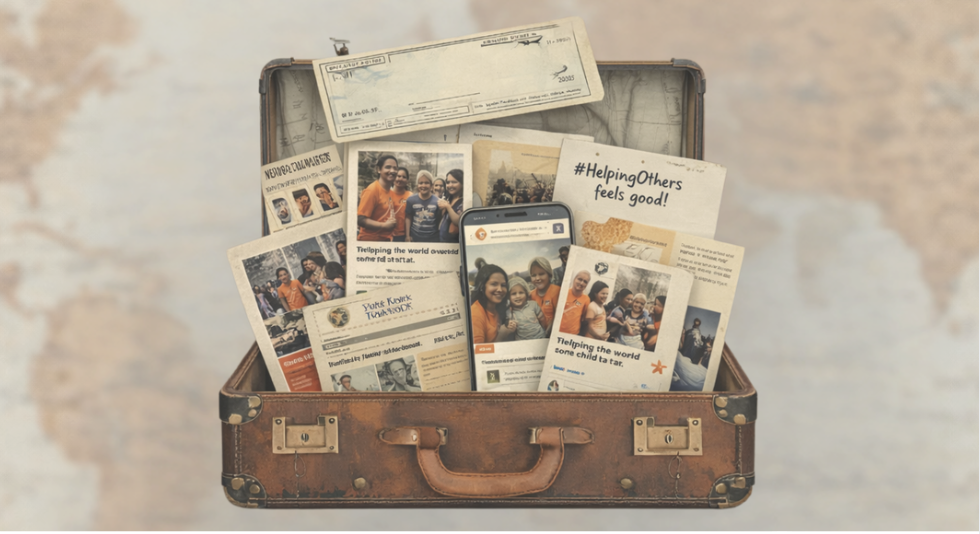
Voluntourism is when tourists volunteer in an organized way to undertake holidays that might involve aiding or alleviating poverty, restoring environments, or researching aspects of society (73). Put simply, it blends “volunteering” and “tourism” — with tourism often taking priority (74).
Colonial roots
Although often described as a relatively recent phenomenon (75, 76, 77), many scholars argue that voluntourism’s logic is rooted in colonial histories and unequal global power relations (78, 79). European colonial missionaries are described as the most obvious predecessor (80). Building on this, research suggests that voluntourism can replicate earlier “saving” narratives, as groups from the Global North intervene in Sub-Saharan Africa under the guise of aid, often with varying levels of local consent, echoing missionary-era dynamics (81). Colonialism itself was frequently justified as benevolent development and framed as the “White Man’s burden” to build Africa (82).
“Help” and “Need” narratives
Contemporary voluntourism is often critiqued for appropriating humanitarian language in ways that imply entire populations “need” Western help to develop — for example through messaging such as “Africans need your help” (83).
A globally growing industry
More than 1.6 million people pay to participate annually (84), spending around $1 billion dollars each year (85) — with average trips costing between $500 and $2,000 (86). Providers often market volunteering as an exciting “adventure,” while volunteers’ suitability may matter less than their financial ability to pay. Even short volunteer activities embedded in a larger trip can fall under voluntourism. Providers are often agencies that market volunteering as an exciting “adventure”, while volunteers’ suitability may matter less than their financial ability to pay. Importantly, even short volunteer activities embedded in a larger trip can fall under voluntourism. Its growth is also reflected in rising visibility, including the increase in Google searches for “Volunteer tourism” from 230,000 to 6,170,000 within a one-month period when comparing 2008 to 2017 (87). Sub-Saharan Africa is often described as one of the fastest growing voluntourist destinations for young people from the Global North (88).
Dark tourism and disaster tourism
In contexts involving people on the move, voluntourism can also appear as “dark tourism” or “disaster tourism” — where individuals travel to camps or humanitarian projects primarily to witness crises, take photos, and collect stories to report back home. These touristic and exploitative elements undermine what support and solidarity work should be.
Consequences of Voluntourism
▶Volunteers are prioritized more than locals
▶Paternalistic and racist-influenced hierarchies are reproduced
▶Sustaining colonial logic and neo-colonial continuity
▶Unqualified support and instability of projects
What does this mean for your work with people on the move?
Even with good intentions, voluntourism cannot be treated as neutral. Because it emerges from histories of intervention and power imbalance, it is always “a political act.” (95) Volunteers may not experience their actions as “political,” but voluntourism can operate as a form of international relations shaped by inequality. Cheong and Miller similarly argue that while voluntourists may aim to “remedy unequal balance of power between rich and poor”, the business itself can perpetuate international dependency (96). If your goal is solidarity rather than saviorism, this means taking responsibility for how you enter, act, and speak within these contexts.
What you can do in practice
Choose organisations carefully. Assess whether the organisation demonstrates sustainability and critical self-reflection. Well-intentioned projects that cannot last long enough, or that make promises they cannot keep, can cause serious harm. Do no harm!
Interrogate your motivation. Listen honestly for traces of voyeurism. Ask yourself whether the attraction of crisis, suffering, or political catastrophe plays a decisive role in your interest. Support work with people on the move should never be disaster tourism, but an act of solidarity.
